Tuesday, 11 March 2014

Scottish Independence: The Vision thing


Inspired by a lovely Radio 4 "Analysis" programme on the Scottish independence debate I had a read of the pro-union Better Togther argument and was shocked to discover how profoundly cack it is. The Radio 4 programme asked the question what positive vision of the union is being presented to sustain Scotland’s continued membership of the United Kingdom. The answer? No much.

Here is the “Better Together” vision:

- We’re stronger as part of the UK, you know, “stronger”
- The UK is better placed than a separate Scotland or England to compete in the global economy
- As part of the UK we have real clout in the UN Security Council, NATO, the EU, AND we have Embassies around the world
- Lots of Scottish people live in England and lots of English people live in Scotland

(Then there’s the negative: “Times are really tough at home and really turbulent internationally. In the future Scotland's prosperity will be strengthened by keeping the British connection. We need more growth, more jobs, and more prosperity in Scotland. We don't need uncertainty, instability, and barriers for our businesses.”)

Now, I don’t know about you, but nothing in the above especially motivates or inspires me. For starters I’ve no idea what “stronger” means in this context. The economic (or prosperity) argument is interesting, except one of the factors encouraging independence is the way the economic, infrastructure and development policies pursued by successive UK governments have been disproportionately skewed towards London be it spending billions more building train lines into, out of, in and around the place or campaigning against EU restrictions on financial sector bonuses.

Then there’s international “clout” and what that’s actually meant in terms of the morally repugnant wars Scotland has been made a part of. Or there’s the billions wasted on a disproportionately large military budget give or take the rank hypocrisy currently on show with regards to Ukraine where – surprise, surprise – the fact Russian “oligarchs” buy London flats and financial products appears to have trumped any notion of a just foreign policy let alone one with “real clout”. Would an independent Scotland be any better? It couldn’t be any worse and there’s real scope to finally step away from the UK’s post imperial hangover and special relationship self-pleasuring.

As for people living here there and everywhere, so what? No pro-independence supporter is saying there would be any restrictions, just think about the voter eligibility requirements. Rather, it’s the anti-independence lot that’s continuing to threaten travel and labour market restrictions if Scotland has the audacity to vote in favour of a government that would actually take Scottish interests seriously.

Then there’s the basics “Better Together” just doesn’t seem capable of getting its head around. Like, Scotland’s political culture is different, OK? We barely vote Tory and voted the SNP into Holyrood when Labour was in power in the UK. Devolution accommodates this to an extent I guess, but when successive Westminster governments are so hell bent on unpicking the great UK institutions like the NHS and the Post Office that once actively made the UK united, then feck ‘em, Scottish independence is simply acknowledging this fact.

However, its not just that the “Better Together” arguments are in themselves cack -  which they are - it’s the pro-union lot’s complete lack of a compelling vision – give or take the chance for us all to wear Team GB swimming trunks -  that really strikes me.  Like the crux of their argument seems to be it might cost everyone c.£752.37 extra a year to live in an independent Scotland. Fine, I’ll pay up because by contrast and by definition independence offers Scotland both a transformative vision and an otherwise unobtainable opportunity to make this a better place.

Wednesday, 12 February 2014

Crime pay

And lo the dumb banker bonus chat has begun with a Barclays CEO interview:

Q. Bonuses are up even though profits are down, aren't bonuses were supposed to be profit related?

A. Yes, well in those specific businesses/departments/teams where profits are down, so are bonuses. But, you have also to bear in mind we compete for expert labour from Singapore to San Francisco, so need to be able to pay competitive wages (i.e. bonuses might also be up in areas where profits are down)

And that's kind of it it would appear, except it's not. In the same way government austerity measures and the associated double digit hacking back of capital spending on flood defenses are for whatever reason only barely being linked to the current floods, so the ongoing run of investment bank shenanigans isn't being linked to investment bank bonuses. 

But it should be. To give some very practical examples due to the various libor, Euribor, ForEx and what not investigations swathes of big bonus investment bank traders have been variously resigned, put on garden leave and sacked. And going by the we need to pay competitive wages to get the best people argument, there's presumably been a spike in pay for unbent libor traders, which are now in even shorter supply - from Singapore to San Francisco even - than they previously were. Or mebbe there's not given the actual number of people trying to get jobs in investment banks plus all those getting laid off elsewhere!

Plus, to what extent has replacing all the dodgy blerks with lovely compliant ones impacted the profitability of the libor, Euribor, ForEx trading departments? This would be nice to know given it would provide a start for assessing how big a share of investment bank profits were due to fraud and how much technical skill/luck (i.e. for any criminal fraud and proceeds of crime action, which you'd normally see if people other than highly paid bankers were involved).

I'm not holding my breath given the SFO's initial response to libor was to debate whether what was obviously a fraud was actually a fraud. In the meantime here's the lovely multi-million pound bonus story of Tom Hayes to keep you warm. What do you reckon he'll get - suspended sentence, not guilty or community service?

The nuclear option


So George Osborne, sources are letting it be known, will rule out the notion of a formal currency union with an independent Scotland? Interesting negotiating position if you're an utter walloper (1).

In that case, when Scotland hopefully votes yes to independence, the Scottish approach to relocating the Rest of the UK's nuclear bombs will presumably be; your problem pal, pick 'em up next Tuesday and F'right off in the meantime. Or not.

Actually negotiating both points would very obviously be the right, nice, sensible, intelligent and decent thing to do. Or is that asking too much of a Bullingdon Club Tory?


(1) interesting reading English people commenting on this and how its all about Scotland wanting its cake and eating it. Even if it was, and? Jealous? And that's besides the obvious benefits a currency union would also give to English businesses that trade with Scotland - or is the approach here one of sour grapes mixed with cutting 10% of your nose off to spite your face?

Saturday, 8 February 2014

(No) stitch in time


That last Labour lot were an utter shower. It’s cos of them we’re in the mess we’re in, cos of them spending, make that wasting, all our money. Wasting I tell you.

Hold that thought for a mo ….. the scenes from waterworld/Somerset are truly gobsmacking as is the fact it appears to have been going on since Christmas. Clearly something should have been and/or must be done about this, except something already was – spending on flood defences in England and Wales was cut (in absolute and real terms) years ago by the current government.

This was part of the initial approach to austerity; routine spending e.g. benefits, are a bugger to cut as the Irritable Bowel-Duncan-Smith experience exemplifies. Capital spending on the other hand is relatively easy, you just cancel or postpone the building of new things like seawalls. Hence, in the early years of austerity, capital spending, even though it’s a relatively modest share of total government spending, accounted for a disproportionate share of the cuts. Capital spending on flood defences illustrates this perfectly, the total being cut 27% from 2010/11 (the last year of Labour spending plans) to 2011/12.

Now would a Labour government have done anything differently if it’d won the last election? Doubt it. But, some of the last Labour government’s spending looks a bit more sensible allova sudden what with them having started ramping up spending towards the £1bn a year level that’s been deemed necessary to cope with all the freak weather we now appear to have.

And there’s the obvious charge of short-sightedness that can be made against the current lot. Would keeping spending at Labour levels have prevented current events? Doubt it, but it might have ameliorated some of them, which, given what they’ll ultimately mean in terms of additional spending on tidying up the mess, lost economic activity and all our insurance premiums, suggests the spending cuts may eventually cost us all far more than they apparently saved *. Oh and it would have created jobs as well.

And BTW the above numbers are nominal i.e. don’t take inflation into account, meaning the reduction in spending is even bigger than it looks.


* you get the impression the nasty bedroom tax has already gone in this direction as well what with the time and money being wasted on chasing up newly created rent arrears and what not.

Thursday, 6 February 2014

The real arguments against Scottish independence


“They” haven’t been telling you what the real arguments are against Scottish independence. “They” have been keeping quiet about them, not wanting you to know. Well there’s no omerta here, not on this blog,  no sir-ee*.

So here they are, these are the real deal, raw and uncut reasons why”they” won’t vote for Scottish independence:

1)      Can’t be arsed
2)      Anyway, have you no seen that shower up in Holyrood?
3)      Besides, see that Alex Salmond, I don’t trust him

And now they’re out in the open, its easy to point out why each one is largely pants.

Take (1), which cuts both ways. Looking over Hadrian’s wall does anyone actually think the UK civil service, politicians or what have you can actually be arsed with all the logistics and negotiations Scottish independence would entail? Like take the nuclear bombs currently stored in Scotland, do you actually think anyone in England can be arsed with storing them given all the construction, protests, planning permission disputes and what no doing so would generate? No me neither and that’s before you’ve started talking about the easy stuff like who get’s what embassy (bagsie Paris for Scotland). Except, from a Scottish perspective this isn't a reason to vote no.

(1) also applies this side of Hadrian’s wall and can be approached via a hypothetical conversation between a dad and his son: “So dad, why did you vote against Scottish independence (assuming you even bothered to vote), why did you commit me to however many more years of masochistic austerity measures used to pay for tax cuts for the rich, why did you want me to live in a Britain where Daily Mail headlines influence education policy, UKIP immigration policy and London & the S. East pretty much everything else government does?” Well son, it’s because I couldn’t be arsed”.

      Re: 2) you’ll get no argument here that that shower up in Holyrood is anything, but a shower. But,
          staying  in the Union won’t change that whereas leaving it will if only because cutting the Westminster  
          escape route will, at the very least, force our existing politicians to compete harder for fewer seats.

3)    I don’t get the down on Alex Salmond being too vain and sleekit personally, I mean Idi Amin is already the King of Scotland, whereas Alex Salmond is just a politician and politicians say what they think the electorate wants to hear. But, anyhoo, as the Labour Party in Scotland’s gradual decline into opposition makes clear, the story of devolution is also the story of how the Scottish electorate can’t be taken for granted; if Alex really is such a bam, then chances are he’ll lose/get turfed out via the wonders of democracy.


* Making these arguments a serious part of the mainstream debate would risk highlighting the apathetic and ignorant nature of much of the electorate, the utter mediocrity of Scottish political life and an associated fixation with the personal that’s trivial even by Nick Robinson standards.

Wednesday, 5 February 2014

A UK North Sea Oil sovereign wealth fund and other fairy tales


As long as Scotland remains a part of the UK, there will never be a Scottish let alone a British North Sea Oil funded sovereign wealth fund. The reasons why are almost entirely political.

To set up a fund now would undermine the notion Scotland benefits financially from being part of the UK especially the more vicious form of this argument that claims England subsidises public spending in Scotland. Setting up a fund now would also prompt questions about why wasn’t it done sooner like in 1990 when Norway set up what’s now the largest fund in the world. More than this it would call into question the credibility and policies of previous governments, Labour and Tory (but particularly the 1980s Tories i.e. Thatcher). Finally, a fund would have too much symbolic meaning; it would be a powerful Scottish nationalist (and Nationalist) totem and a recurring reminder that for quite some time now no Scotland very clearly hasn't been "better together".

So we won’t get one (and neither will the UK). Instead, without Scottish independence, today’s revenues will continue getting spent today, there’ll be no north sea oil funded investment in Britain and no meaningful legacy for future generations.

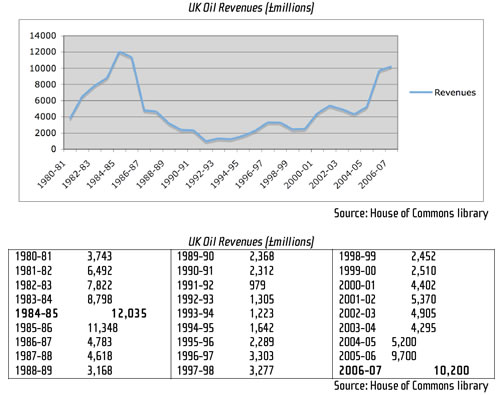
Instead, the best we’ll get is yet another “expert” being trotted out to claim (yet again) that future production and revenues are in secular decline (other than when they aren't - see graph/numbers above, recent headlines about record investment in the North Sea by super majors etc.,), so it just isn't worth the candle (well if its so unimportant, there'd be no harm setting one up then).

Wednesday, 29 January 2014

Is the case for Scottish independence in tatters?


Mark Carney’s Scottish speech is too measured a thing for commentators not to aggressively spray it with a mixture of twaddle and tosh in a manner largely reliant on implausible strawmen.

Take the notion of control and how a post-independence Scotland that entered a currency union with the Rest of the UK (rUK) would have no control over its exchange rate. Except, all this means is an independent Scotland wouldn’t gain something it currently doesn't have i.e. there would be no change. Hence, when Robert Peston trots out the following twaddle “Now the value of the pound would tend to reflect economic conditions in the larger economic area of England, Wales and Northern Ireland, not the more recessionary conditions in Scotland. So the pound would not fall to offset the downturn in Scotland and give a boost to the export prospects of Scottish companies”, he is ignoring the fact this is already the case.  

As for tosh, Robert Peston then goes on, in a Treasury paper type styley, to say that “the economies of Scotland and that of RUK would diverge”, this being, it would appear, a terribly bad thing because a Rest of the UK set monetary policy might not suit Scotland.

Except, again this is already the case and besides here’s what Mark Carney actually said about divergence: “Surprisingly, a review of major currency areas suggests that similarity is neither necessary nor sufficient for success. For example, the industrial structures of the core and periphery of the euro area are more similar than those of the constituents of Canada or the US (table 1). Yet few  would argue that the euro area is the most effective currency union of the three. Conversely, the Canadian monetary union works well despite having substantially larger industrial variation than even the US …..being similar doesn’t necessarily help and being different doesn’t necessarily hinder”.

Mark Carney then says there would also be a need for a banking union, which would entail:

1)      Common supervisory standards,
2)      Access to central bank liquidity and lender of last resort facilities,
3)      Common resolution mechanisms, and
4)      A credible deposit guarantee scheme

Now, this is the ideal type scenario, the EU not having all of the above, but anyhoo, lets take each in turn:

1)     Fine, give us a copy of the rule book we’ve already part paid for and that financial institutions already adhere to, sometimes (and because a Scottish financial system would be much simpler e.g. no hedge funds or investment banks, it would also be cheaper to supervise)
2)     Hmm, this is a bit trickier
3)     Nae bother, we’ll get a copy of the rule book when its finally agreed (there isn’t really one at the moment) and/or introduce the necessary laws into the Scottish parliament using the UK precedent.
4)     You mean like the one all the foreign banks already operating in London already have? Oh go on then.

Suddenly independence isn’t an especially daunting prospect anymore and that’s before we get to the meat of the issue and the prize; fiscal policy or to quote Mark Carney “there is an obvious tension between using robust fiscal rules to solve this problem, and allowing national fiscal policy to act as a shock absorber. This reinforces the need for fiscal risk sharing between nations. “

Or to put it another way, an independent Scotland wouldn’t be able to tax and spend exactly how it chose, be that recklessly or not. Except we knew that already and anyway, even if Scotland had an independent currency, the bond markets and rating agencies would make clear what appropriate government debt levels and spending levels would be.

However, even if total government spending could only vary incrementally from the rUK, there is obvious scope for what the total gets spent on to vary significantly, which actually matters a lot.

Two quick examples: First, transport and infrastructure – Right now, Crossrail is Europe’s biggest construction project. At a cost of c.£16bn it will make it easier to commute across London. When Crossrail is finished it looks like the biggest construction project will be HS2, which will make it easier to commute into London. Before Crossrail, the Chunnel was probably the biggest construction project, which made it easier to travel from Paris to - wait for it, wait for it - London. Then there’s the possibility of another Heathrow runway, which would make it easier to travel into London from well anywhere really i..e. an independent Scotland would be able to spend the same amount of money it currently contributes to rUK infrastructure spending, but on things other than the long-term UK commitment to massively subsidising London commuters, like have you seen the state of the roads round Aberdeen, howzabout finally reinstating the Waverly line or having a dual carriageway all the way through the borders?

Second, military spending and foreign policy; in one of his pro-Union speeches Alastair Darling highlighted the phallic size of the British military budget as if spending all that money on being able to kill people was a good thing. Except, whereas Britain had the 4th largest military budget in the world in 2013 and spent a bigger share of its GDP on it than Japan, France, Italy and Germany, the British economy was only the 7th largest. So here’s a mad proposal, an independent Scotland could pay itself a peace dividend by cutting military spending back to a level either in line with its economy or less than. Then, it took the money saved and spent it on mad shit like social housing, education, care for the elderly, economic development and so on without breaching any overall fiscal rules (and not invading anymore countries at the behest of the US).

So does Mark Carney’s speech leave the case for independence in tatters? No it fucking well does not.